Our Rums
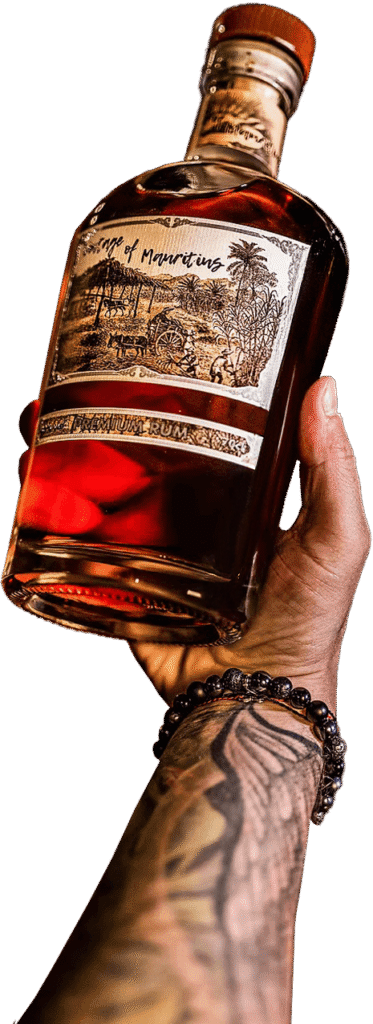
Each bottle is a limited edition, hand-filled, with an emphasis on quality and an authentic experience.
Royal Rhum
Exclusive Mauritian Agricole Rhum from pure sugarcane juice.

Vintage Rum
Exceptional Mauritian triple-distilled molasses rum, aged in oak barrels.
How Our Rums Are Made

Production
The exceptional quality of our rums is based on a combination of several factors.
The highest quality raw materials: crystal clear water, hand-harvested select sugarcane, and premium yeasts. Experts with years of experience supervise all phases of the production process.

Fermentation
The preparation of the most suitable yeasts takes 12 hours, followed by another 12 hours for the fermentation process.
The desired result is achieved in just 24 hours. Heat is released during fermentation, so it is crucial to maintain a constant temperature in the fermentation areas, which should not exceed 35°C.

Distillation
Our rums are distilled using the “column still” method.
Distillation columns reach temperatures of up to 120°C.
At the beginning of distillation, all undesirable components are separated. Subsequently, the raw material is transferred to a large vat known as a “column classic,” where alcohol is separated from other volatile substances. Distillation significantly increases the alcohol percentage.

Aging
After the complex distillation process, the rum must be allowed to rest.
We store the rums in stainless steel vats for 4 to 6 months. During this period, the alcohol content gradually decreases, achieving a pleasant roundness and fullness of flavor. The aging process continues with long-term storage of the rum in French oak barrels.

Bottling & Distribution
The uniqueness of our rums is complemented by high-quality, solid glass bottles with cork stoppers.
Bottling and labeling are performed exclusively by hand. The entire production process of our products is subject to strict quality control.
The uniqueness of the Royal Rhum and Vintage of Mauritius brands stems not only from the first-class quality of their raw materials, the ancient recipe, and the processing and aging processes, but also from the limited number of bottles produced.