
RUM, RHUM, RON (2)
In recent years, no alcoholic beverage on our market has seen such a significant surge in interest as rum.
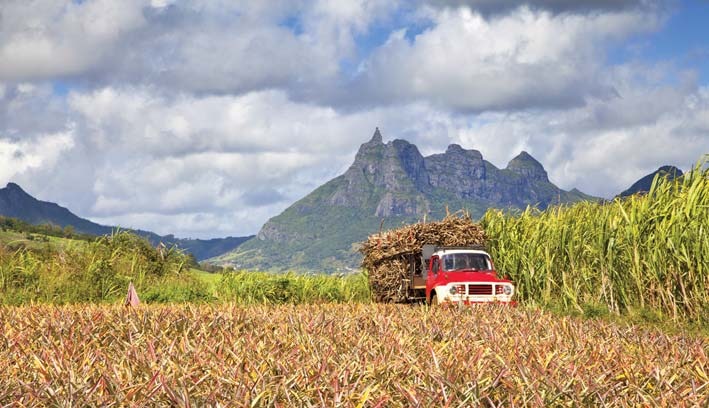
At the beginning of the ‘rum journey’ is sugarcane. This plant takes a minimum of nine and a maximum of 24 months to grow and become suitable for harvesting and further processing. Everything depends on the soil in which it grows and, of course, on the climatic conditions. During growth, the sugar content is continuously monitored, and when the values are at their peak, harvesting begins. The quality of sugarcane depends on sufficient moisture, which is often managed by irrigation systems throughout the cultivation process. In today’s modern era, harvesters are used for crop collection as the fastest method, but extremely laborious manual harvesting still predominates. Some growers set fire to the fields before harvesting, a remnant of old methods used to protect harvesters from venomous animals, but primarily to remove dry leaves and waste material with fire. Nowadays, this burning practice is being abandoned. Interestingly, a single planting of sugarcane yields for 7 to 8 seasons. To preserve quality and due to the virtual impossibility of long-term storage, it is crucial that the harvested crop is transported to sugar mills for further processing as quickly as possible, ideally immediately, and no later than 24 hours. The later the crop is transported, the sooner it begins to undergo natural oxidation processes. Sugarcane is a highly productive plant; one ton often yields up to 800 liters of juice. Pressing equipment, through which it usually passes twice, handles this. The dry residues are used as fuel for electricity generation to power sugar mills and distilleries.
By-product
The primary goal of sugarcane growers remains the production of cane sugar. During its production process, a by-product, molasses, is formed – a dark, viscous substance with approximately 40 to 50 percent non-crystallizable sugars, such as fructose and sucrose, along with numerous vitamins and minerals. In addition to further processing for rum production, it is used in the food and chemical industries. Its significant advantage is that it can be stored and is not dependent on the harvesting season. Thus, production can occur year-round. It is not uncommon for even the most renowned rum producers to purchase molasses from various growers and processors to ensure production volume. In this sector, it is a highly sought-after commodity.
Sources of Production
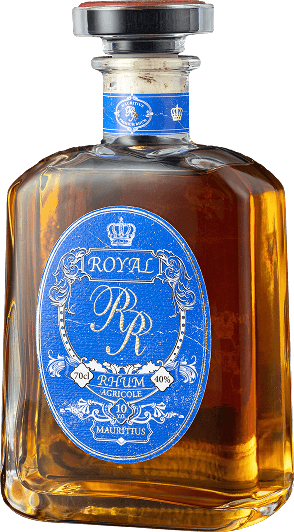
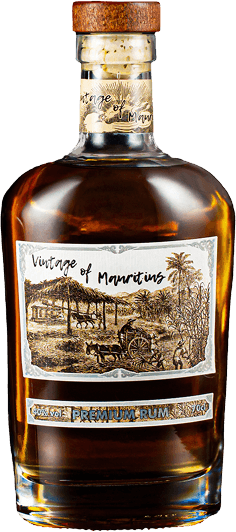
Approximately 90 percent of the world’s rum production is made from molasses, with the remaining 10 percent derived from fermented sugarcane juice, cane syrup, virgin honey, and other specific methods of processed fresh juice (concentrate, jaggery, battery syrup). The most renowned rum in this category is known as agricultural rum or Rhum Agricole. For the production of Agricole Rhums, sugarcane is transported directly to the distillery after harvesting, where it is pressed, and the fresh juice, known as sugarcane juice, is then processed using identical methods as rums made from molasses. This type of rum is primarily known in French overseas regions such as Martinique and Guadeloupe, as well as in former French colonies (the islands of Réunion and Mauritius). The entire production process of Agricole Rhums, from sugarcane cultivation and harvesting to the complete manufacturing process, is subject to strictly defined criteria for guaranteed quality and exceptionality. All of this, naturally, fully manifests in the specific tastes, aromas, and overall character compared to rums made from molasses.
Rhum Agricole
Rhum Agricole is a French term for sugarcane rum, a style of rum originally distilled in the French Caribbean islands from freshly pressed sugarcane juice, rather than molasses. Rhum is a term that typically distinguishes it in French-speaking countries from rum made from molasses in other parts of the world (Rum, Ron). Sugarcane juice rum primarily originates from Haiti, Martinique, and Guadeloupe, the islands of Marie-Galante, Grande-Terre, and Basse-Terre, but it is produced throughout the Caribbean, including Trinidad, Panama, the Dominican Republic, and Grenada, in India, on the island of Mauritius, Réunion, and in the Pacific on the Hawaiian Islands. Martinican producers of sugarcane juice rums made exclusively in Martinique and meeting certain production standards are entitled, under French law, to the designation Appellation d’Origine Contrôlée (protected French designation of origin) AOC Martinique Rhum Agricole. This designation is unique to Martinique and does not define the category of sugarcane juice rum or Rhum Agricole.